Nobody budgets enthusiastically for maintenance. It produces no new features, no launch announcement, nothing a stakeholder can see. So it slips, quarter after quarter, until a routine framework update becomes a six-figure migration because four years of changes now have to land at once.
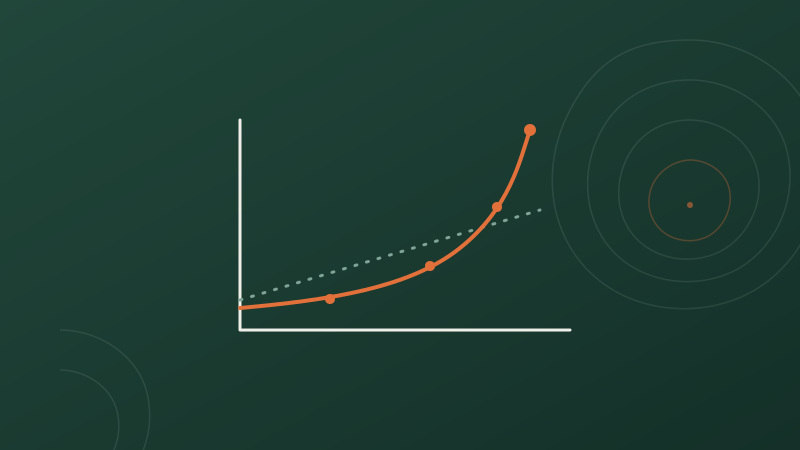
Maintenance debt compounds the way financial debt does. Each skipped update makes the next one harder: dependencies drift further from current versions, security patches stop applying cleanly, and the developers who understood the original decisions move on. The cost curve is not linear. It bends upward sharply somewhere around the point where vendors drop support for the versions you are running.
The organizations that avoid the crisis treat maintenance as a fixed operating cost, not a discretionary project. A few days a quarter keeps frameworks current, dependencies patched, and upgrades boring. Boring is the goal. An upgrade that takes an afternoon is a sign the system is healthy.
If you have already deferred for years, the answer is not panic. It is an honest assessment: what versions are you on, what has reached end of life, and what is the shortest safe path back to supported software. That assessment is cheap. The surprise, when it comes uninvited, is not.